When Hinged Doors Still Make Sense in Modern Homes
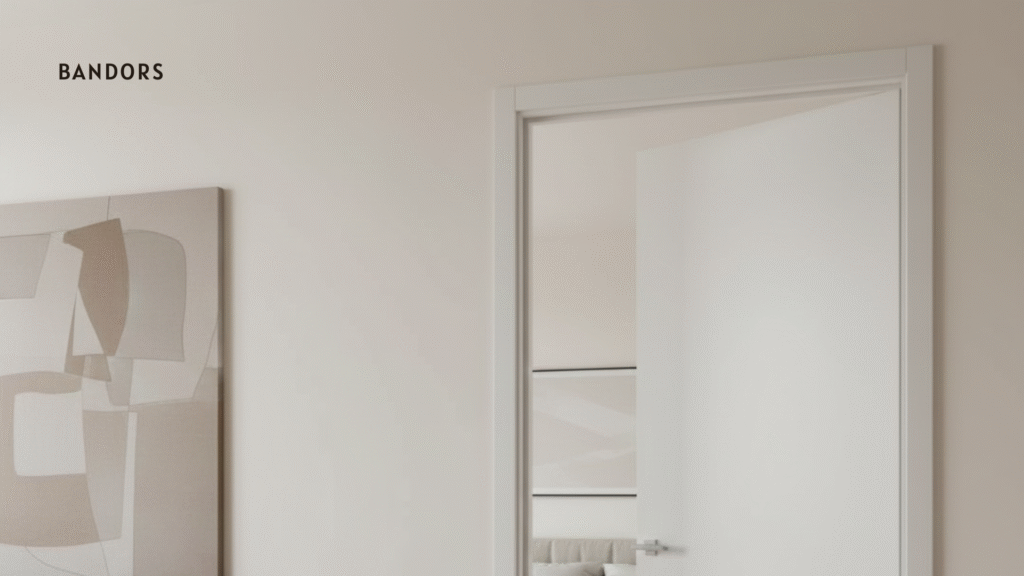
In an era dominated by sliding systems and disappearing partitions, hinged doors can feel almost invisible—familiar to the point of being overlooked. Yet in modern homes, they continue to serve an important role, not because they are traditional, but because they solve certain problems better than any alternative.
Designers rarely dismiss hinged doors outright. Instead, they consider where and why they are used. This article examines when hinged doors still make sense in contemporary interiors, and why they remain relevant despite the growing popularity of sliding solutions.
The Strength of Clear Separation
Hinged doors create a definitive threshold. Their swing establishes a clear sense of entry and closure that sliding doors often soften.
In spaces where psychological separation matters—such as bedrooms, bathrooms, and private studies—this clarity can be essential. The act of opening and closing a hinged door reinforces privacy in a way that subtler systems sometimes cannot.
Acoustic and Visual Control
From a performance perspective, hinged doors typically offer superior sound and light control. Their tighter seals reduce noise transfer and limit light leakage, making them a practical choice for rooms that require discretion.
Designers often prioritise hinged doors in:
Bedrooms
Bathrooms
Media rooms
Shared apartments where privacy varies
These considerations stand in contrast to more flexible systems discussed in sliding doors vs hinged doors, where openness and adaptability are the primary goals.
Reliability in Everyday Use
Hinged doors are mechanically simple. Their longevity, ease of repair, and predictable operation contribute to their continued use in modern homes.
While sliding systems offer spatial advantages, hinged doors are often preferred in high-use areas where durability and low maintenance are priorities. Designers frequently balance innovation with reliability, especially in family homes.
Where Space Allows, Hinged Doors Perform Best
In homes where floor space is not severely constrained, the swing clearance required by hinged doors becomes less of a concern. In these settings, their functional benefits often outweigh their spatial demands.
In contrast, compact layouts tend to favour alternatives designed specifically to save space.
This distinction becomes particularly relevant in discussions around interior doors for small apartments, where swing clearance can significantly affect usability.
Design Evolution of the Hinged Door
Modern hinged doors are no longer limited to traditional profiles. Flush panels, concealed hinges, and minimal frames allow them to integrate seamlessly into contemporary interiors.
When designed thoughtfully, hinged doors can:
Blend into wall planes
Support minimalist aesthetics
Avoid drawing unnecessary attention
Their success depends on proportion and detailing rather than novelty.
When Hinged Doors May Not Be the Best Choice
Hinged doors are less suitable in spaces where:
Floor area is tightly limited
Flexible boundaries are preferred
Visual continuity is a priority
In such cases, sliding or pocket doors may provide more adaptable solutions.
These trade-offs mirror the broader considerations outlined in when pocket doors make sense for managing space without permanence.
Conclusion
Hinged doors endure not because they are familiar, but because they are effective. In modern homes, they continue to provide clarity, privacy, and reliability where these qualities matter most.
Rather than viewing hinged doors as outdated, designers treat them as purposeful tools—best used in the right context, alongside other systems that support more flexible living.
Recent Comments