Sliding Doors vs Hinged Doors: How Designers Rethink Everyday Interior Choices
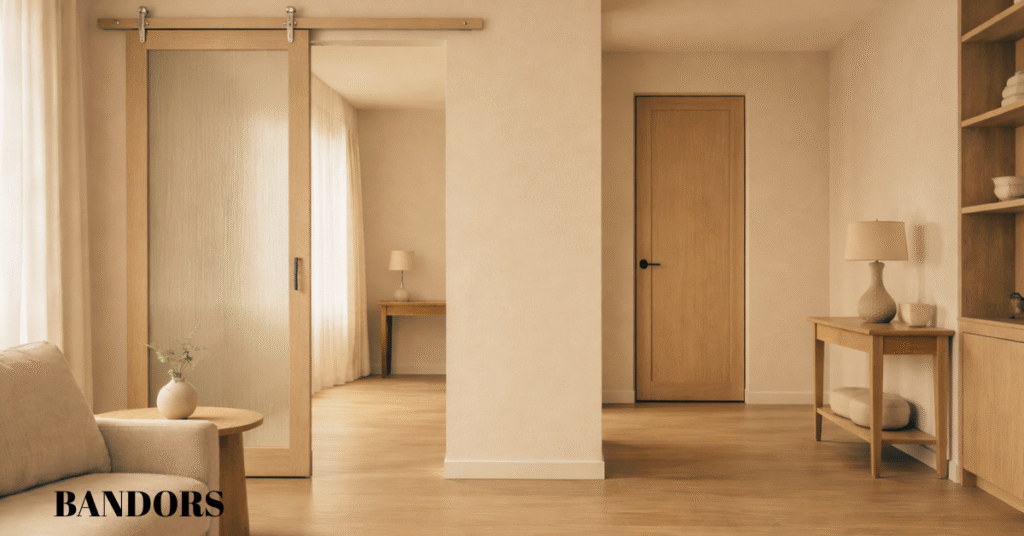
Every interior door makes a quiet promise. It promises movement, separation, and a certain rhythm to daily life. For decades, hinged doors have fulfilled that role almost unquestioned. But as homes evolve—becoming more open, compact, and flexible—sliding doors are increasingly part of the conversation.
Rather than framing this as a matter of old versus new, designers now approach the decision more thoughtfully. The real question is not which door is better, but which door better supports how a space is actually used.
Understanding the Core Difference
Hinged doors open on a swing. Their movement is familiar and predictable, requiring clear floor space and creating a defined threshold between rooms.
Sliding doors move laterally. By eliminating swing clearance, they change how space is navigated—often allowing rooms to expand and contract more fluidly.
This difference may seem simple, but it has a meaningful impact on how interiors feel and function.
How Movement Shapes Spatial Experience
Hinged doors introduce a moment of pause. Opening and closing them reinforces separation, which can be desirable in rooms where privacy and enclosure matter.
Sliding doors soften that boundary. When open, they reduce the sense of division, allowing light and sightlines to pass through more easily. In modern homes, this often supports a more relaxed, adaptable way of living.
Much of this shift reflects a broader reassessment of interior doors in general, particularly as designers reconsider the pros and cons of barn doors and other sliding systems within contemporary layouts.
Space Efficiency and Layout Constraints
In compact homes and apartments, every square foot matters.
Hinged doors require clearance—space that must remain unobstructed by furniture or circulation paths. Sliding doors, by contrast, remove that constraint, making them especially appealing in tighter layouts.
That said, sliding doors introduce their own requirements, whether in the form of wall space (for surface-mounted systems) or internal cavities (for concealed systems). Designers weigh these constraints carefully against the realities of the floor plan.
Privacy, Sound, and Everyday Comfort
From a performance standpoint, hinged doors generally provide better acoustic and light control. Their tighter seals make them well suited for bedrooms, bathrooms, and private studies.
Sliding doors vary. Some offer adequate separation for daily use, while others prioritise flexibility over full enclosure. Designers tend to specify them in areas where visual division is more important than sound insulation.
These considerations become especially clear when comparing sliding systems like barn doors and pocket doors, where movement and visibility shape very different experiences.
Aesthetic Integration in Modern Interiors
Visually, hinged doors are often designed to recede. Flush panels, concealed hinges, and minimal detailing allow them to blend quietly into walls.
Sliding doors can either disappear—or deliberately stand out. Depending on the system and material, they may act as subtle architectural elements or expressive features within a space.
Neither approach is inherently superior. What matters is whether the door’s visual presence aligns with the broader design language of the home.
Maintenance and Long-Term Use
Hinged doors are mechanically simple and widely understood. Their longevity and ease of repair contribute to their continued relevance.
Sliding doors introduce more moving parts, but when properly installed, they can perform reliably for years. Designers often consider accessibility for maintenance alongside aesthetics and layout when advising homeowners.
Choosing Between Sliding and Hinged Doors
Designers rarely make this decision based on trend alone. Instead, they ask:
Does the space require clear separation or flexible boundaries?
Is floor space limited or abundant?
Should the door be felt—or barely noticed?
The answers tend to reveal which system will feel most natural over time.
Final Thoughts
Sliding doors and hinged doors serve the same purpose, yet shape everyday living in distinct ways. One reinforces separation; the other encourages flow.
In modern interiors, the most successful choice is rarely the most familiar one. It is the one that responds thoughtfully to how a space is lived in—day after day.
Recent Comments