The Difference Between Visible and Invisible Door Systems in Modern Interiors
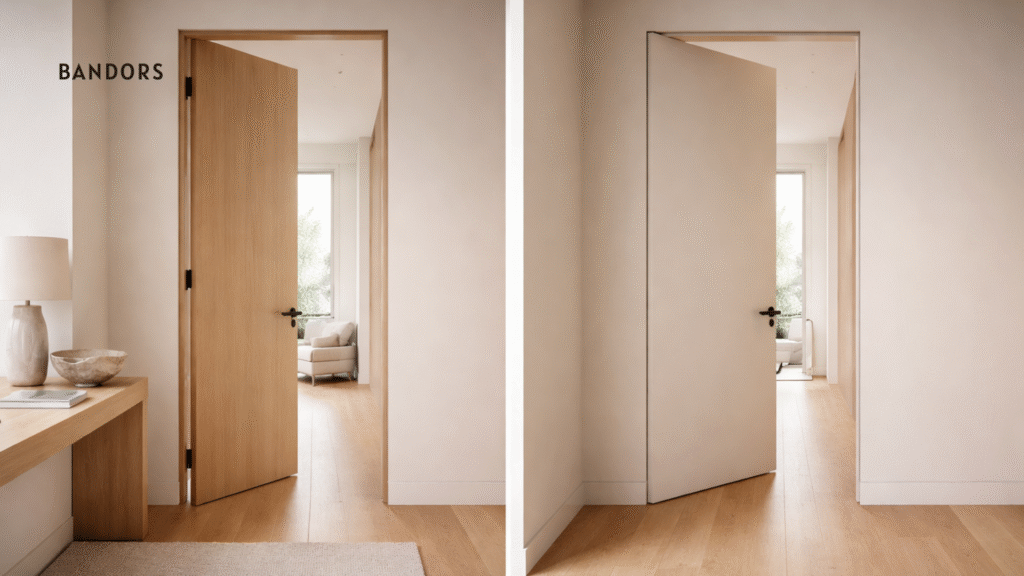
Across different cultures and housing typologies, interior doors serve a similar purpose—but they are experienced very differently. In some homes, doors are meant to be seen, becoming part of the architectural language. In others, the ideal door is one that disappears entirely.
From Scandinavian apartments to North American family homes and dense urban residences across Asia, designers increasingly distinguish between visible and invisible door systems. This article explores how these two approaches differ, where each works best, and how cultural context shapes their use in modern interiors.
What Defines a Visible Door System
Visible door systems are designed to be noticed. Whether hinged, sliding, or surface-mounted, their presence contributes to the visual rhythm of a space.
Common characteristics include:
Doors that remain visible when open
Hardware that is intentionally exposed
Panels that contrast or complement surrounding walls
In many interiors, visible doors provide orientation and structure—helping occupants understand how spaces connect and separate.
Invisible Door Systems and the Idea of Disappearance
Invisible door systems take the opposite approach. Pocket doors, flush panels, and concealed hardware allow doors to recede into the architecture.
When open, these systems leave little to no visual trace. When closed, they align closely with walls, maintaining continuity rather than contrast.
This approach is especially common in:
Scandinavian-inspired interiors
Compact urban apartments
Homes prioritising minimalism and visual calm
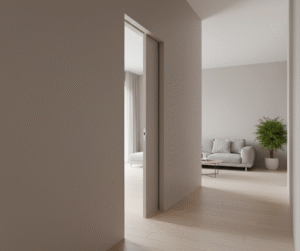
This design logic closely aligns with discussions around when pocket doors make sense in modern homes, where disappearance becomes a functional advantage.
How Culture Influences Door Visibility
Cultural expectations often shape how doors are designed and perceived.
In North America, visible doors frequently serve practical and psychological roles—clearly marking private and shared spaces. In Scandinavian interiors, restraint and continuity are often prioritised, favouring systems that blend quietly into the background.
In dense urban environments across Asia, invisible door systems are often used to maximise perceived space and reduce visual clutter, particularly in compact residences.
These differences highlight that door visibility is rarely a purely aesthetic decision.
Spatial Flow and Daily Movement
Visible doors tend to emphasise transitions. Opening and closing them reinforces boundaries and signals a shift from one space to another.
Invisible doors soften those transitions. When open, they allow rooms to merge, supporting a more fluid pattern of movement.
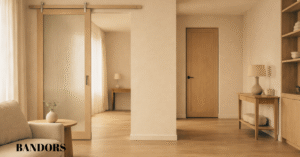
These contrasting experiences echo broader comparisons between door systems, such as those explored in sliding doors vs hinged doors and how movement shapes interior layouts.
Privacy, Acoustics, and Function
From a performance perspective, visibility often correlates with function rather than quality.
Visible systems—particularly hinged doors—generally provide stronger acoustic separation and clearer privacy. Invisible systems may offer sufficient separation for daily use but often prioritise flexibility over enclosure.
Designers weigh these trade-offs carefully, matching door systems to the functional demands of each space rather than applying a single solution throughout a home.
Maintenance and Longevity Across Door Types
Visible door systems benefit from accessibility. Hardware is easier to service, adjust, and replace over time.
Invisible systems, while visually refined, require precise installation. Their mechanisms are concealed, which can complicate maintenance if issues arise.
That said, when properly designed and installed, both systems can perform reliably for many years.
Choosing Between Visible and Invisible Doors
Rather than asking which approach is better, designers typically ask:
Should this door define the space or disappear within it?
Is clarity or continuity more important here?
How permanent is the boundary this door creates?
The answers often reflect not just layout constraints, but lifestyle, culture, and personal preference.
Conclusion
Visible and invisible door systems represent two distinct philosophies in modern interior design. One values expression and definition; the other prioritises calm and continuity.
Across global markets, neither approach dominates. Instead, successful interiors use both—selecting visibility or invisibility where it serves the space best. In this way, doors become less about division, and more about intention.
Recent Comments