Interior Doors for Small Apartments: Design Strategies That Save Space
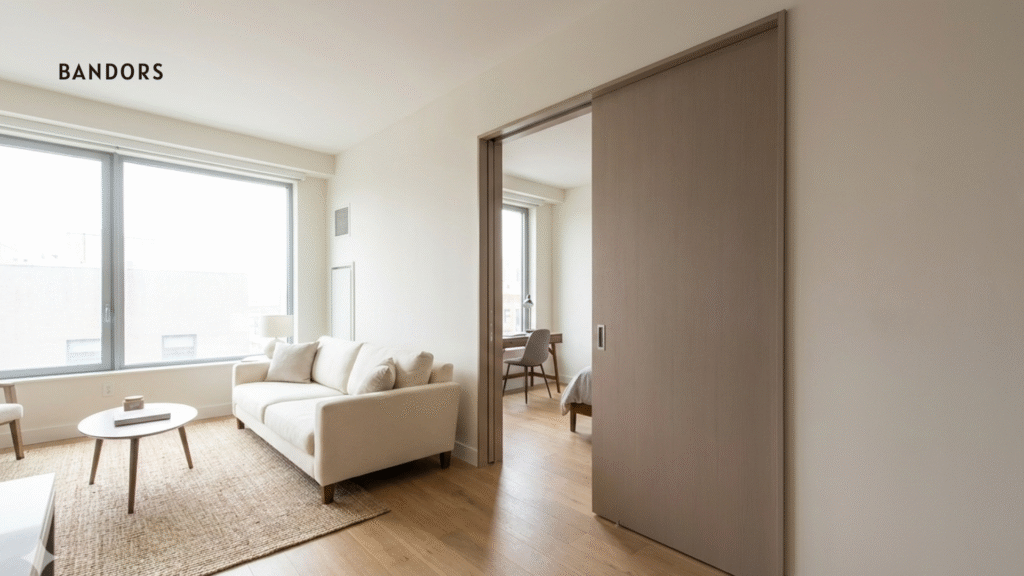
In small apartments, every design decision carries weight. Floor space is limited, circulation paths overlap, and even minor choices—like how a door opens—can shape how comfortably a home functions.
For designers, interior doors in compact homes are less about style statements and more about strategy. The right door can free up movement, improve light flow, and make tight layouts feel calmer and more intentional. This article looks at how designers approach interior doors for small apartments, and which systems tend to work best when space is at a premium.
Why Door Choice Matters More in Small Homes
In larger houses, doors often disappear into the background. In apartments, they rarely have that luxury.
A swinging door that works perfectly in a spacious layout can become an obstacle in a compact one—colliding with furniture, narrowing walkways, or interrupting natural movement. Designers therefore treat doors in small apartments as active spatial elements rather than passive components.
Sliding Doors as a Space-Saving Solution
Sliding doors are frequently the first option designers consider in small apartments. By eliminating swing clearance, they allow furniture placement and circulation to be planned more efficiently.
Surface-mounted sliding doors can work well where wall space is available, while concealed systems offer a cleaner visual result. The key advantage is flexibility: spaces can be separated when needed, then opened up without consuming additional floor area.
This flexibility is often part of a broader shift toward rethinking everyday door choices, especially when sliding doors are compared with hinged doors in compact layouts.
Pocket Doors for Maximum Visual Calm
When designers want doors to disappear entirely, pocket doors are often the preferred solution. Sliding into the wall cavity, they remove visual clutter and allow rooms to merge seamlessly.
In small apartments, pocket doors are commonly used for:
Bathrooms adjoining bedrooms
Home offices within open-plan spaces
Closets and utility areas
Their success depends on planning. Wall construction must allow for a clear cavity, making pocket doors easier to integrate in new builds or full renovations.
This emphasis on discretion and efficiency reflects the same logic explored when pocket doors are used to manage space quietly in modern homes.
Glass Doors to Borrow Light Without Losing Separation
Natural light can be scarce in small apartments, particularly those with limited window exposure. Glass doors offer a way to maintain separation without blocking daylight.
Sliding glass doors are often used to divide living and dining areas, or to enclose home offices while keeping spaces visually connected. Frosted or textured glass can provide privacy while still allowing light to pass through.
Designers often weigh these benefits alongside other sliding systems, much like the considerations discussed in glass sliding doors in modern homes.
When Hinged Doors Still Make Sense
Despite their space demands, hinged doors are not automatically excluded from small apartments. In certain situations—such as bathrooms or bedrooms requiring stronger sound insulation—they remain the most practical option.
Designers mitigate their impact by:
Choosing doors that open against walls
Using slimmer profiles
Minimising hardware visibility
In tight spaces, careful placement matters more than the door type itself.
Material and Finish Choices That Reduce Visual Weight
Beyond mechanics, materials play a role in how doors feel within small apartments. Light finishes, flush panels, and minimal detailing help doors recede rather than dominate.
Glass, painted surfaces, and seamless wall integration are favoured over heavy textures or bold contrasts. The goal is visual continuity, allowing the apartment to feel cohesive rather than segmented.
Conclusion
In small apartments, interior doors are design tools as much as functional necessities. Sliding, pocket, glass, and hinged doors each offer advantages when used with intention.
The most effective solutions are rarely about choosing the trendiest system. Instead, they reflect a careful understanding of movement, light, and daily routines. When door choices align with how a space is actually lived in, even the smallest apartment can feel considered and comfortable.
Recent Comments